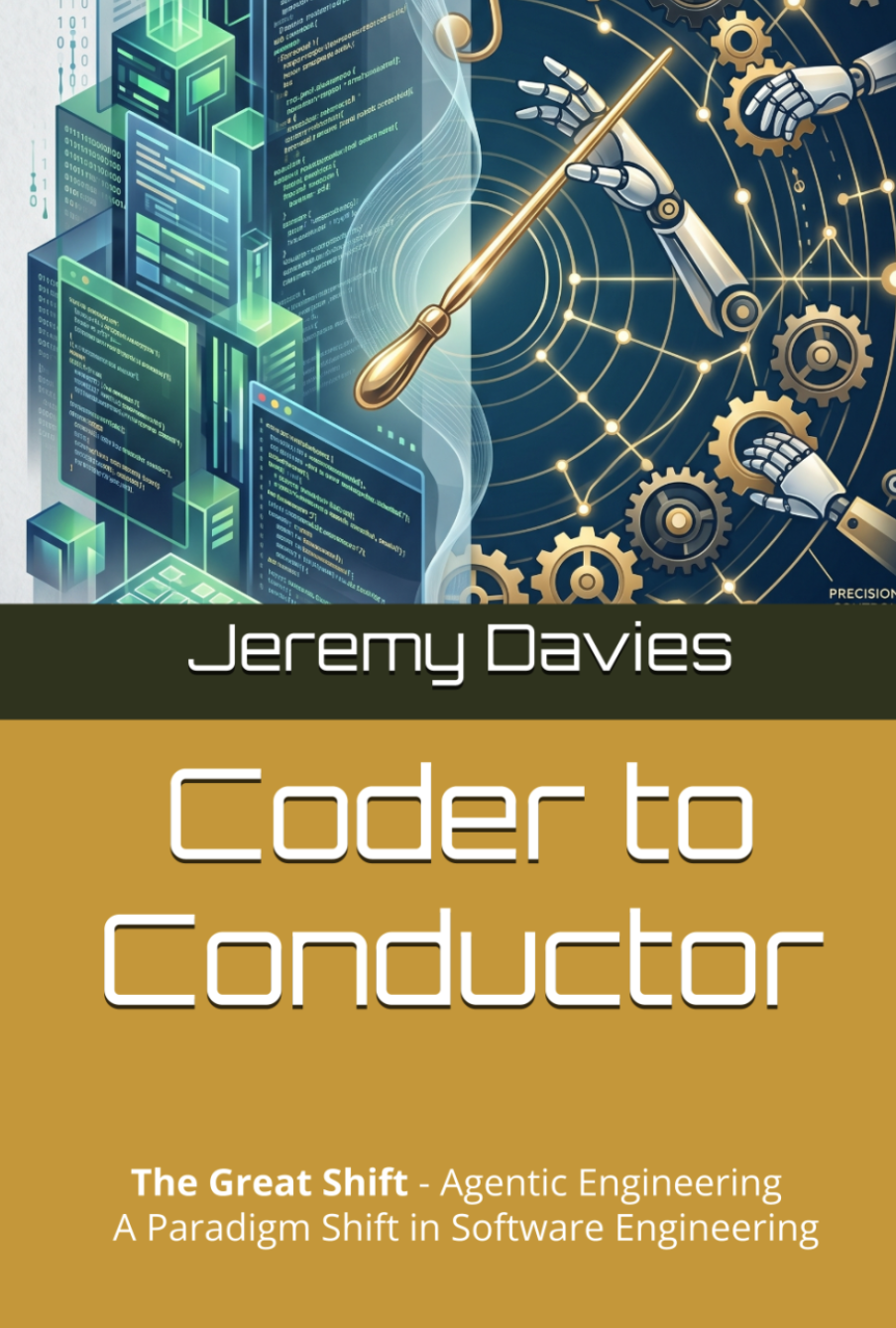
The Great Shift: Agentic Engineering — a paradigm change in software.
For every engineer who ever wondered what comes after writing the code.
The Book
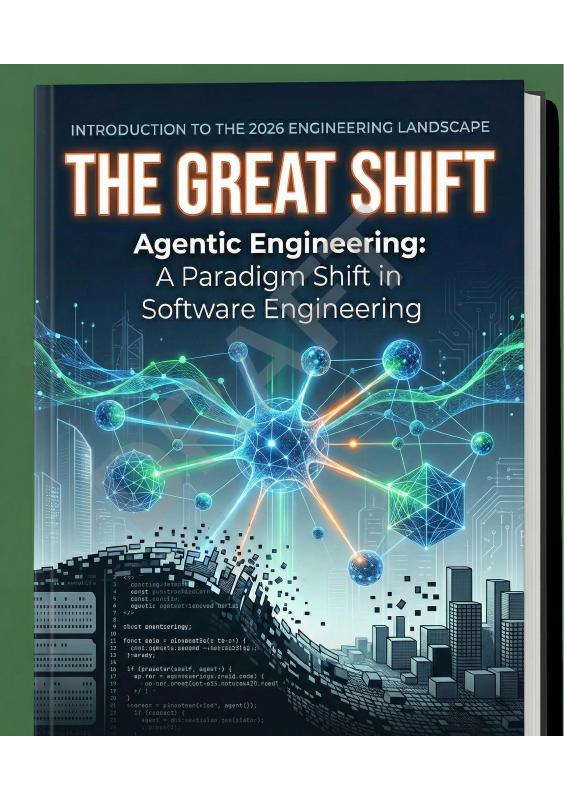
The Great Shift — Agentic Engineering. The research series, drawn together into a single argument: a paradigm shift in software engineering, from writing the code to conducting the systems that do.
14 papers tracing the shift from craft-coding to agentic orchestration. Each entry is a self-contained argument; together they form a single trajectory — from the day-to-day work of the engineer to the org chart, the ledger, and the institutions around them.
The opening paper of the series and the conceptual foundation for everything that follows. It argues that 2026 marks a structural inflection point in software engineering: the locus of human effort is migrating away from…
Companion paper to *The Great Shift*. If the first paper described the shift in human effort, this one describes what becomes possible when the middle of the pipeline becomes autonomous. The codebase itself begins to dri…
If the codebase can drive itself, what is left for the engineer to do? This paper answers: become the architect of intent. The engineer is no longer a coder but a craftsperson of specifications, contexts, and evaluation …
A pointed argument that the pull request — the human-to-human handshake at the heart of modern SDLC — has become the single biggest bottleneck in agentic engineering. Written for engineering leaders in regulated indu…
The first four papers assumed the engineering transformation will happen. This one asks whether organisations can afford it. The seat-based licensing model that finance departments have used for thirty years is decoratio…
A warning against the most seductive failure mode of the agentic transition: importing the existing SDLC wholesale and pointing agents at it. The paper distinguishes SDLC, AI-SDLC, and Agentic ADLC, argues that retrofitt…
The hiring decision has bifurcated. Engineering leaders no longer choose between candidates; they choose between humans and machines for the same role. This paper provides a practical framework for budgeting, staffing, a…
The classic refactor-versus-rewrite calculation has been inverted. When agents can rebuild a system from intent in days rather than the years a team would have needed, carrying inherited technical debt forward becomes th…
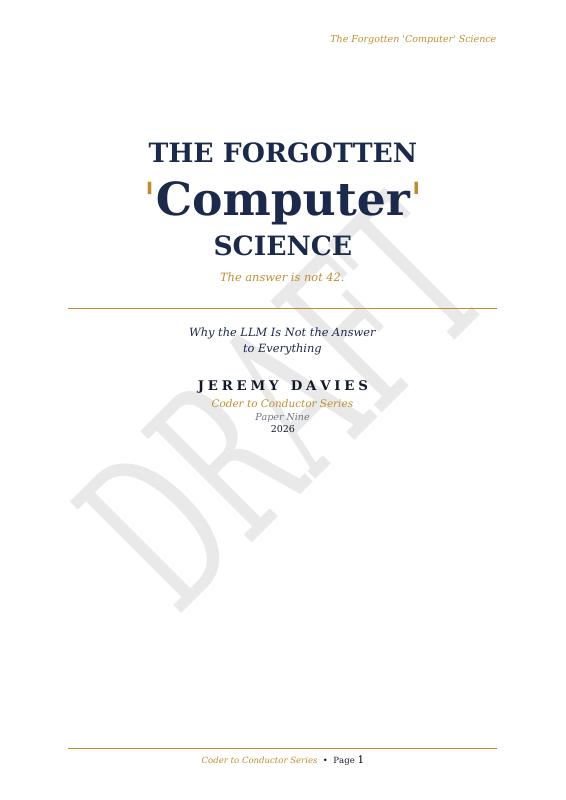
A counterweight to the rest of the series. Amid the rush to put a language model behind every problem, this paper reminds engineers that deterministic algorithms, data structures, and classical computer science still sol…
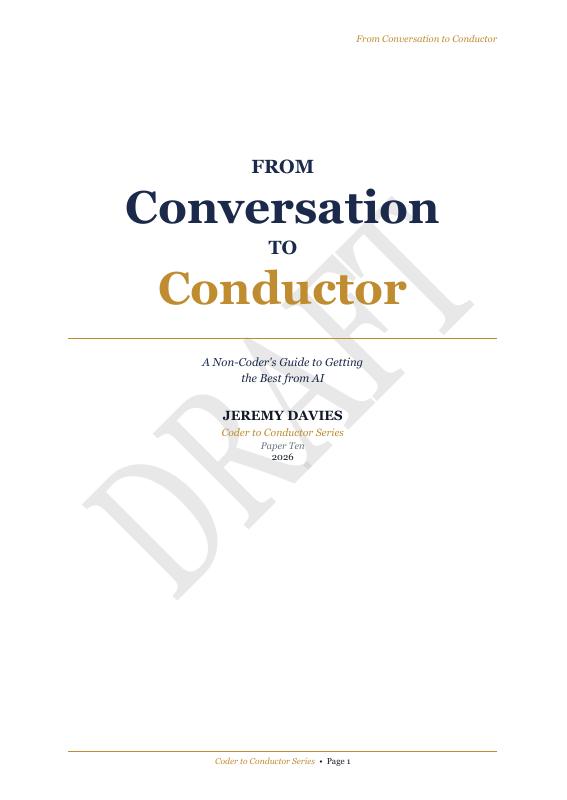
The only paper in the series aimed at non-engineers. It bridges the gap between casually chatting with an AI and orchestrating it to do real work, translating the conductor metaphor for business stakeholders, product man…
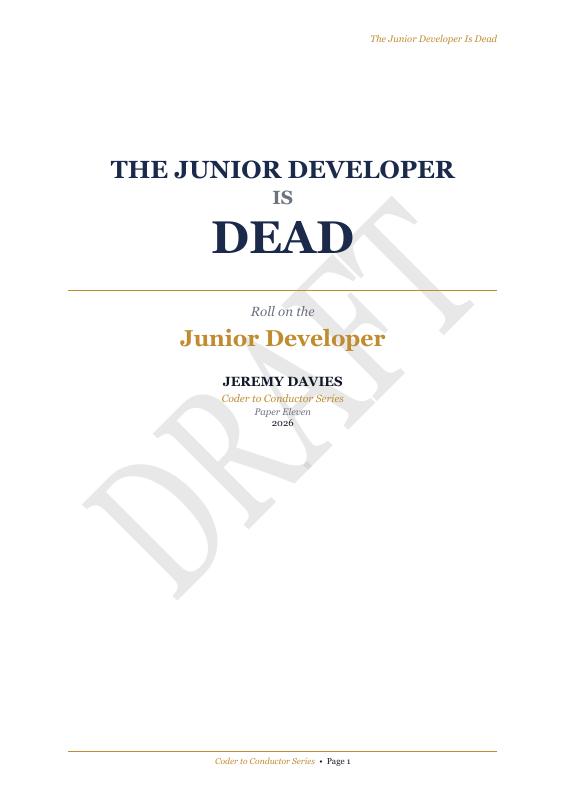
A meditation on the disappearing entry rung of the software career ladder. The tasks juniors traditionally cut their teeth on — boilerplate, simple tickets, first-pass implementations — are exactly the tasks agents n…
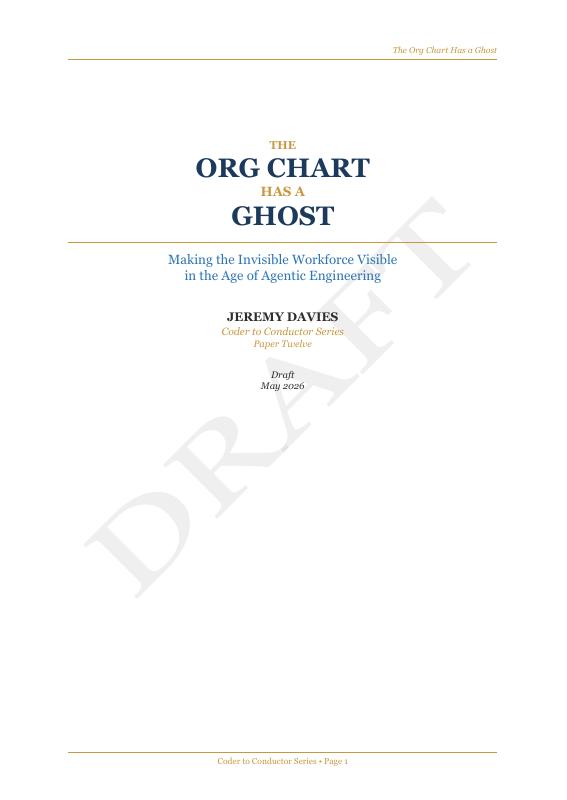
In most enterprises, agents are doing the work of additional team members but appear nowhere — not on the org chart, not on the headcount plan, not on the capacity report. The paper argues that this invisibility is no …
While earlier papers described structural changes, this one describes an operational one. The agentic workforce does not clock off at six, take weekends, or need standups. The standups, sprints, and PR reviews of human t…
The closing paper challenges the foundational assumption every modern methodology shares: that work must be decomposed into small, human-sized units before it can be executed. Epics into stories, stories into tasks, task…
The Author
Jeremy is a highly skilled computer scientist with an MSc in his field. With a passion for technology and a wealth of knowledge in software development, he has played a critical role in driving his company's technological advancements.
He has a keen eye for detail and an innate ability to turn complex technical concepts into tangible products and solutions — and writes the Coder to Conductor series to map the territory openly, while it is still being drawn.
Contact
For talks, interviews, or commentary on the series.